
The thesis for degen gaming


Over the past few years, there's been a category of consumer products that's been quietly growing at an incredible pace - Financialized Entertainment (perps/memes/sports betting/poker/prediction mkts).These products are uniquely suited to crypto, and represent some of the most interesting design space for net-new interactive experiences to date.The next 1000x+ trade will be finding its next iteration.
the casino on mars?
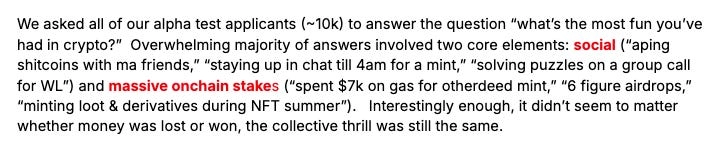
To understand the state of the current market, all you really need to know is that pretty much everything that's worked so far in consumer crypto (outside of stablecoins and other financial rails) has been some form of financialized entertainment - consumer products where the stakes / risk of (fake internet money) involved is a core part of the experience, creating some level of entertainment and social value.
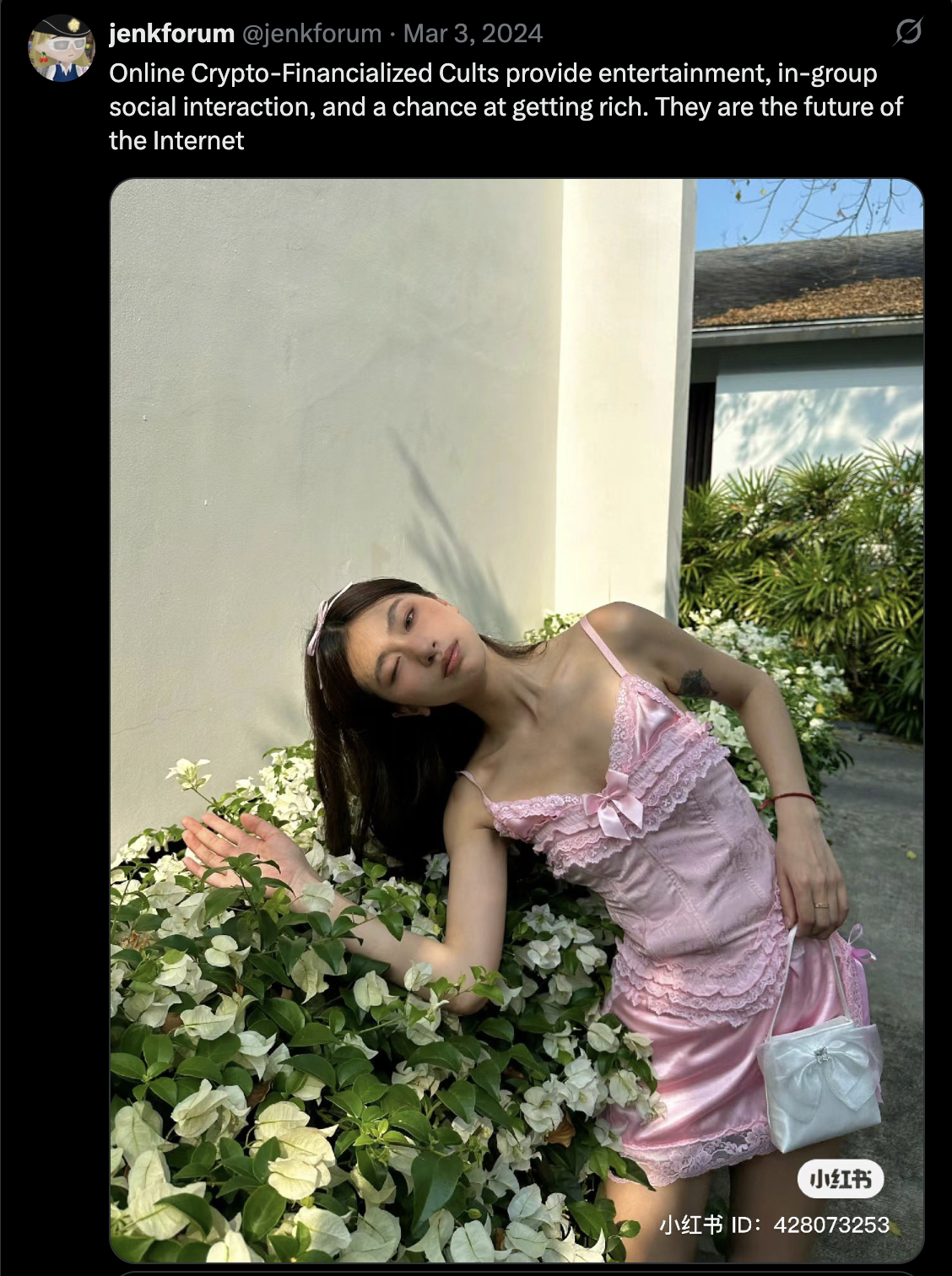
Even from the very beginning with ICOs / alts, this audience and core motivation has dominated. Trading (mostly worthless) tokies around essentially became an 24/7 MMO driven by narratives (lore) on Crypto Twitter (the social substrate), with FnF groups as guilds and the terminally online internet as players.
Are 99% of crypto tokens vaporware? Sure.
Does it really matter, if people have fun trading them?

With financialized entertainment, there's no obligation to create any tangible value outside of the fun, especially since the underlying economics of these products are zero-sum, by technical nature (wHo iS ThE mArgINAL buYeR). Entertainment has huge intrinsic value even if its watching trillions of fake internet $ spin around in a circle. People pay for entertainment every day.
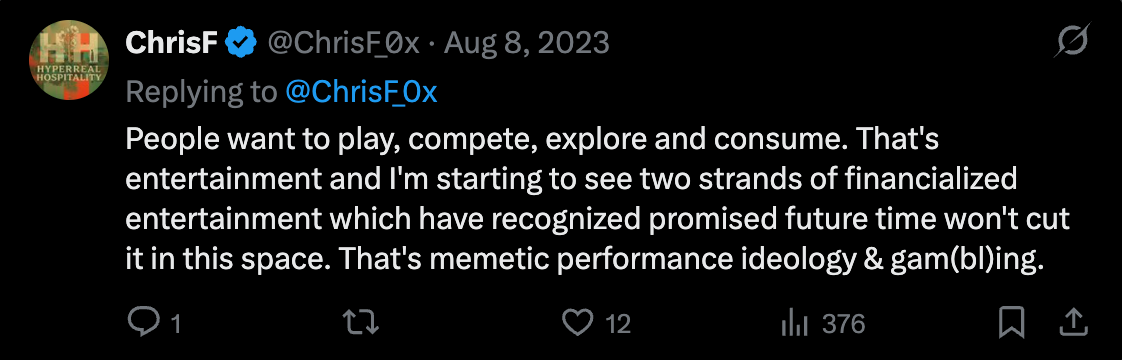
Some of these products also end up creating additional value add outside of just entertainment. Prediction markets create truth machines w/ real utility as an externality of speculation. Crypto trading blurs the lines between speculative entertainment and "investing." Not every crypto token is a casino chip - many (think Hyperliquid, Pump, AAVE, etc.) represent real networks with real users centered around real products, and are some of the fastest growing businesses on planet earth.
people love this shit
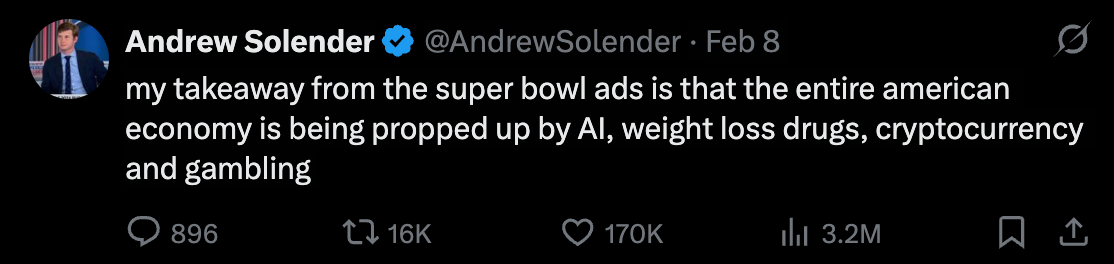
What many forget is that financialized entertainment has been the primary driver behind almost all of the real “breakout” moments / cultural relevance peaks for crypto, onboarding millions onto decentralized rails.
DeFi summer, NFTs, ponzi games, memes, perps, and now prediction markets - each has been slightly different in design, but all have tapped into pretty much the same demand.
Some have died down (NFTs probably the most) since their peaks.
But as a whole, the category has undeniable product-market fit. Fading interest in one specific vertical of financialized entertainment often ends up as just being an early signal of the meteoric rise of another. Top Shot / Axie Infinity kicked off the first big bull market. Polymarket did $3B+ in election volume. “SOL shitcoin” is now in ur average normie's vocabulary.
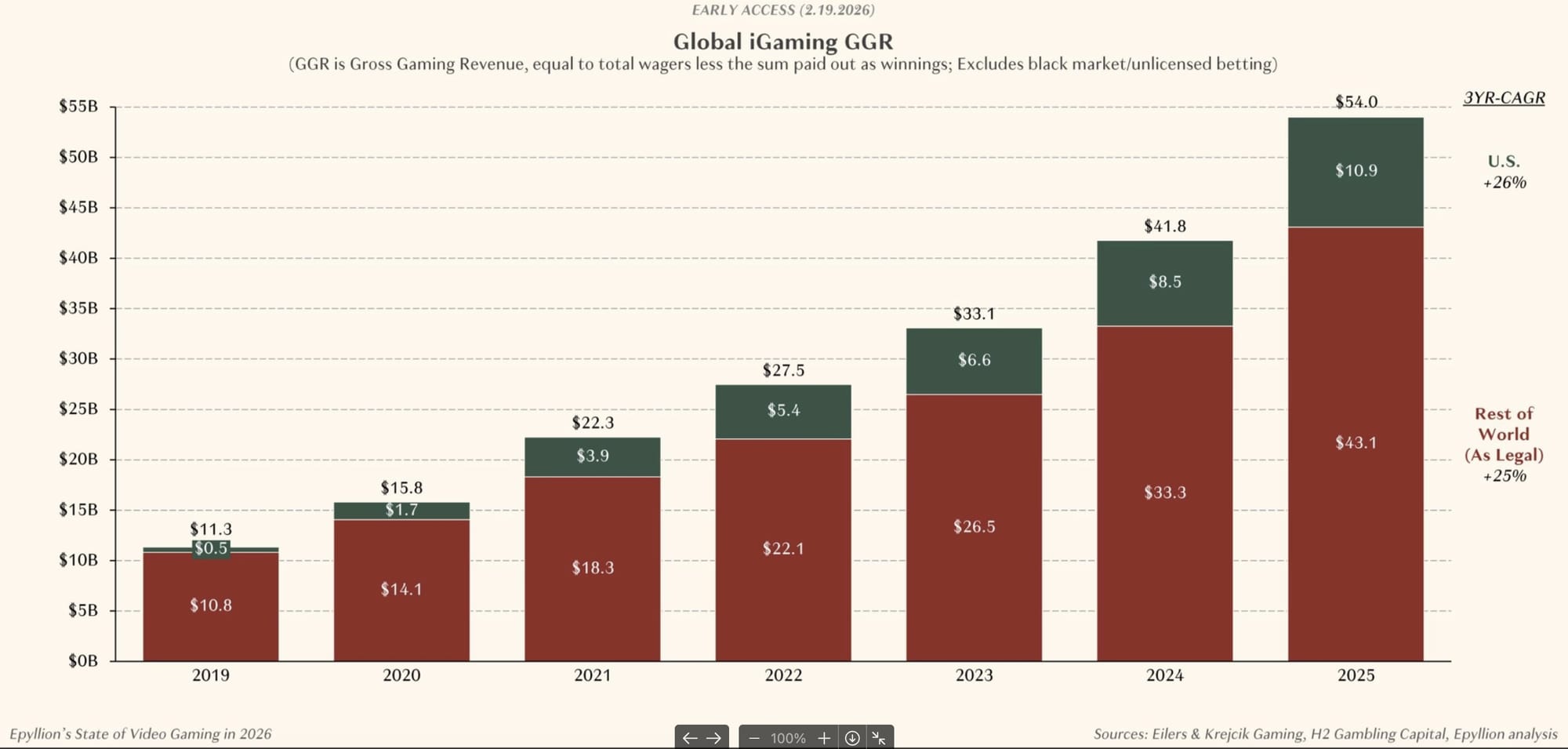
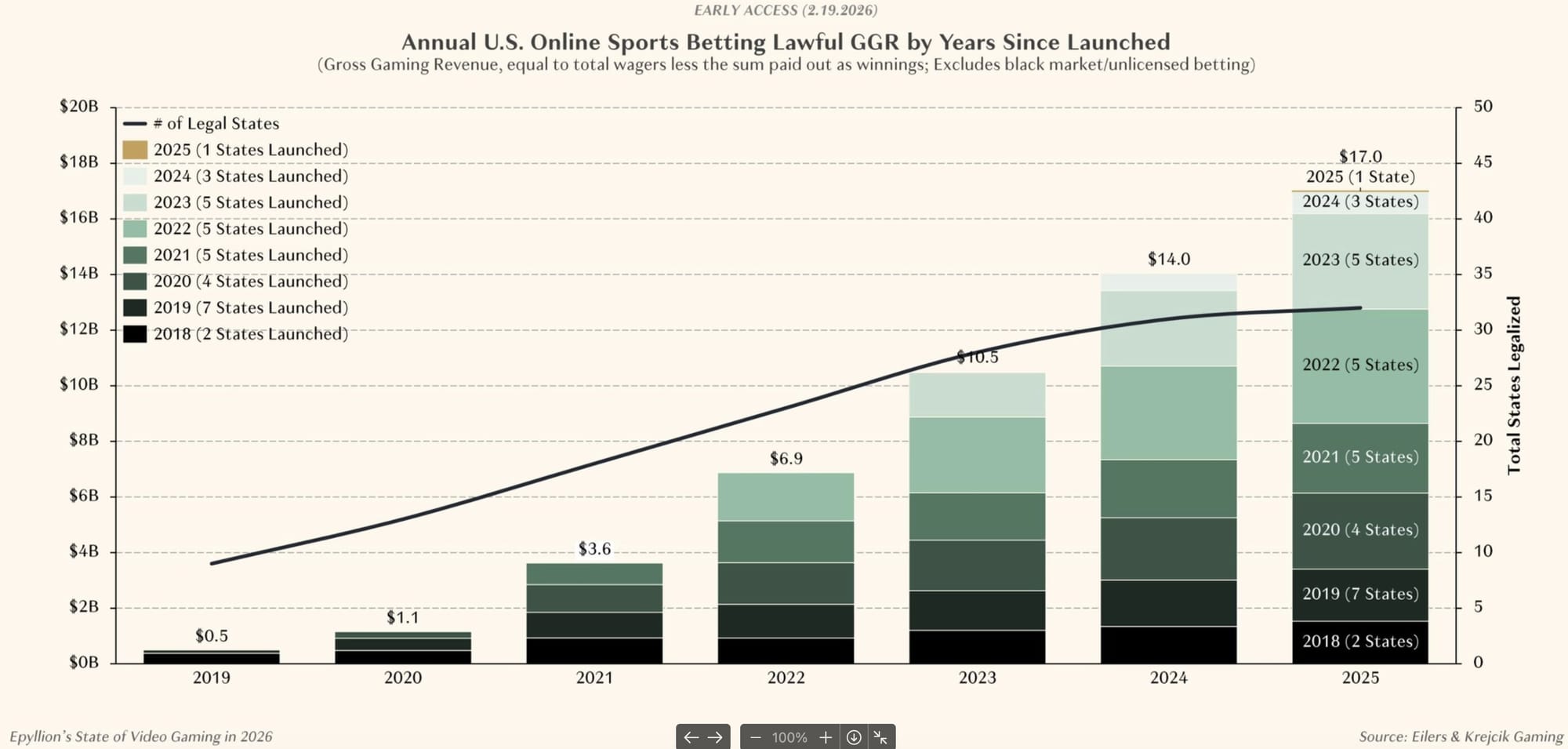
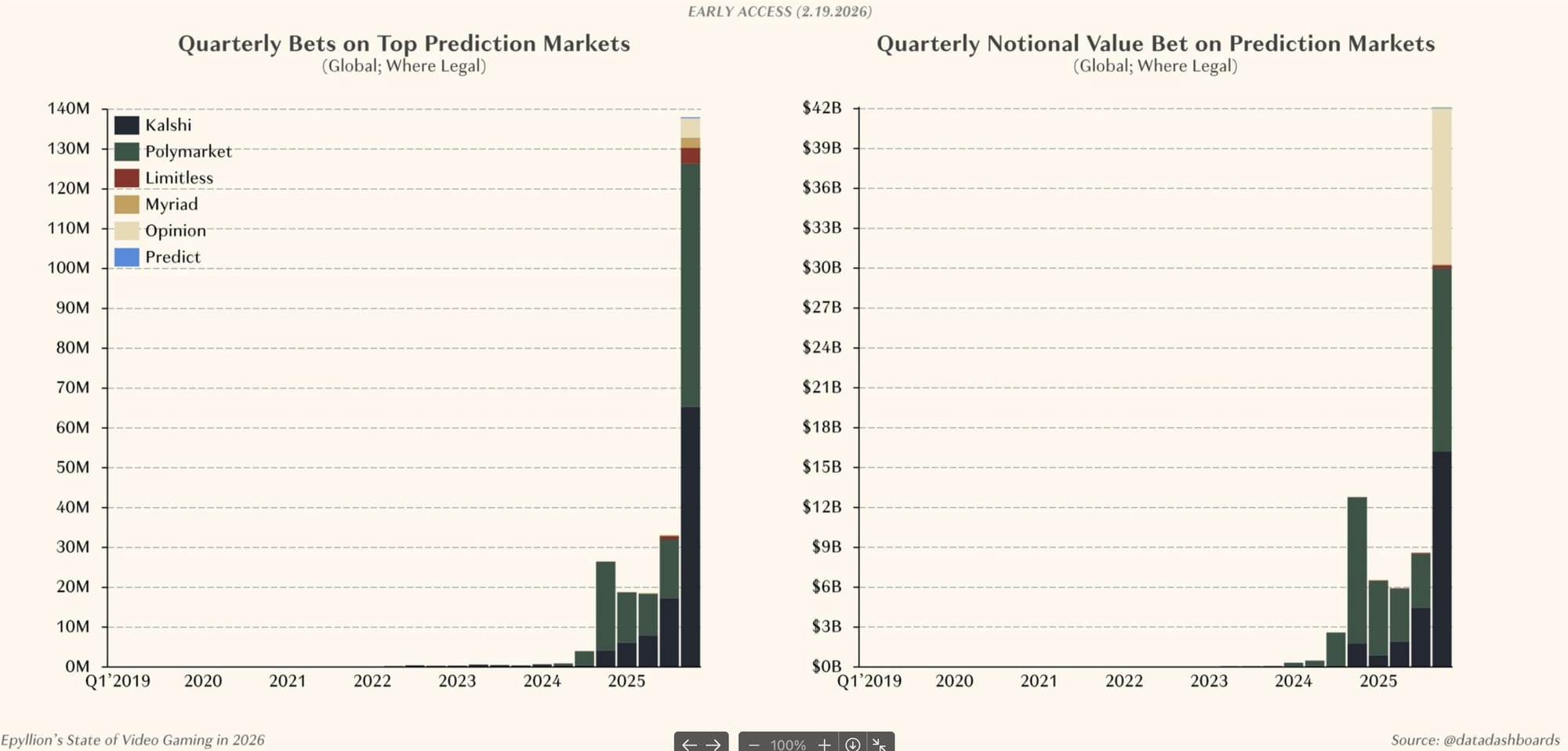
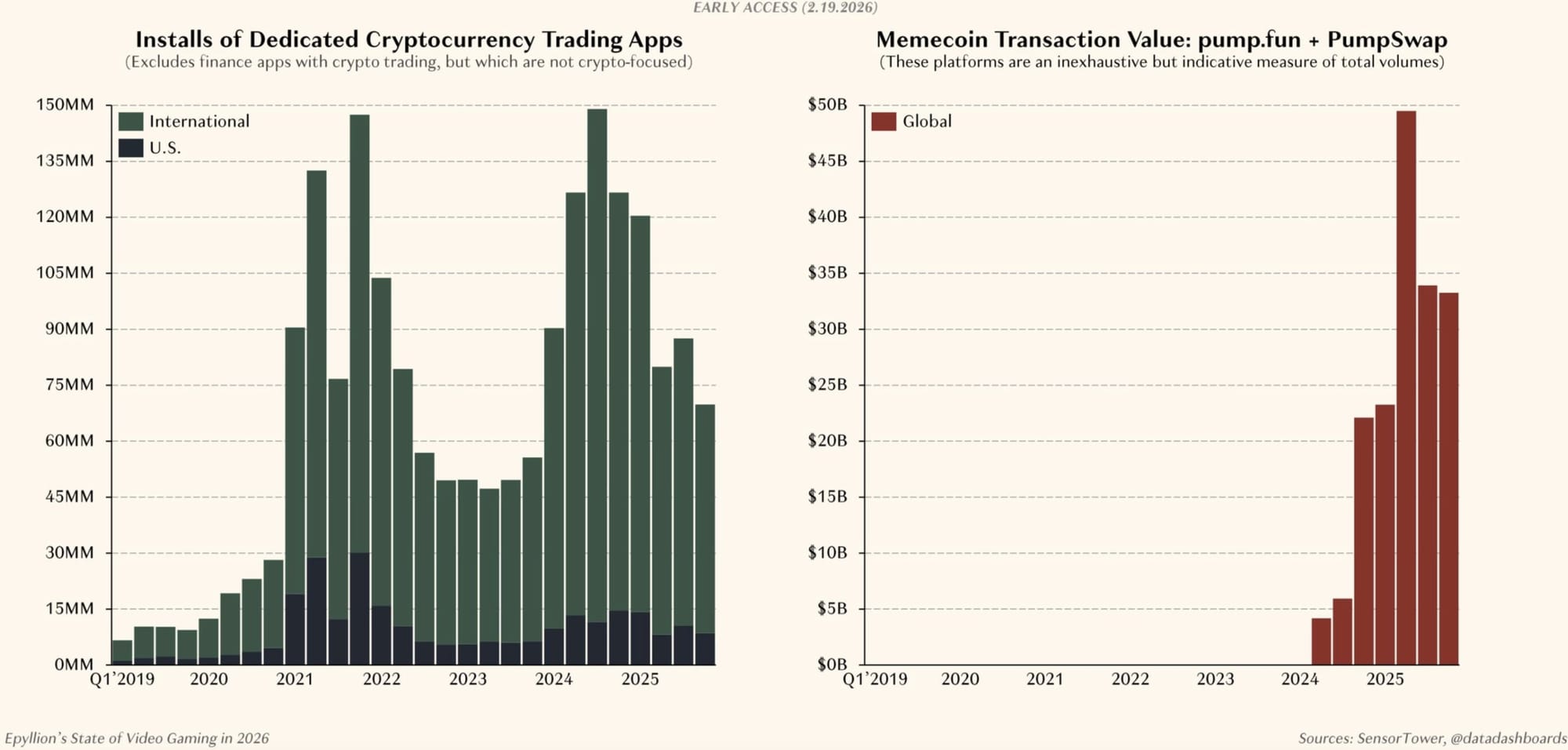
Source: Epyllion
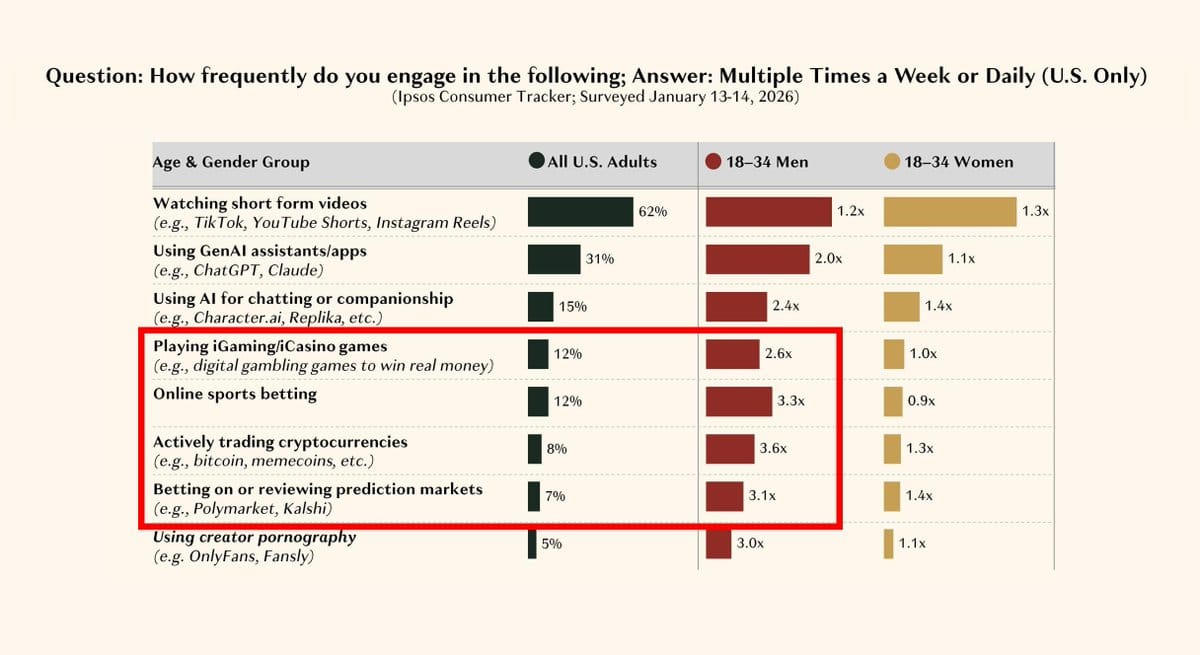
What's even crazier is that this growth looks like its just beginning, especially with younger generations. US Men 18-35 are 3.6x as likely as older generations to use prediction markets, trade crypto, sports bet, and iGame (real money games) - h/t @Epyllionco
how it works
There’s a few things common to almost all these products:
- #1 - Real Stakes - dopamine/acc
- #2 - Fast Feedback Loops - perps, not spot. put ppl into flow state
- #3 - Perpetual Content Cycle / Metagame variation - often from PvP
- #4 - Asymmetric Upside - 1000x gain porn
- #5 - Skill / Luck Ambiguity - players need to believe they have edge
- #6 - Social Virality / Community / Identity - stakes create connections
why its growing
The demand for real stakes is a natural psychological reaction to an existence that is increasingly alien to people with traits that have been selected for across millennia of human evolution. Modern society has stripped almost every bit of "edge" away from the average person's daily life, in favor of NPC routines.

Work is now increasingly abstracted and meaningless. When predictable paths to "progression" irl start disappearing, feedback loops between effort and outcome collapse - success increasingly becomes the outcome of what seems like inscrutable, algorithmic chance, tilted towards those who've already made it. The "will to power" has nowhere to go.
What makes financialized entertainment products appealing is that they offer a compressed arena where you can make a decision, take a risk, and something happens. You are the central agent. The market responds to you, resolves quickly, and for a moment the world makes sense, and you matter in it. People these days crave significance, and stakes provide that.
We're returning to monke, but at the scale & speed of the internet.
stakes are social
In these environments, those who take the biggest risks and survive gain the most status. This is why leaderboards in crypto products work so well. People want to create identities online, to be known and seen.In prehistoric times, cavemen always ran in tight knit packs for survival. They risked the life or death of the entire group daily, on small decisions like when to hunt, who to trust. The fact that someone new you met didn't stab you in the back for your gear while out on a hunt probably made you a friend for life. The environment created natural, deep connections.
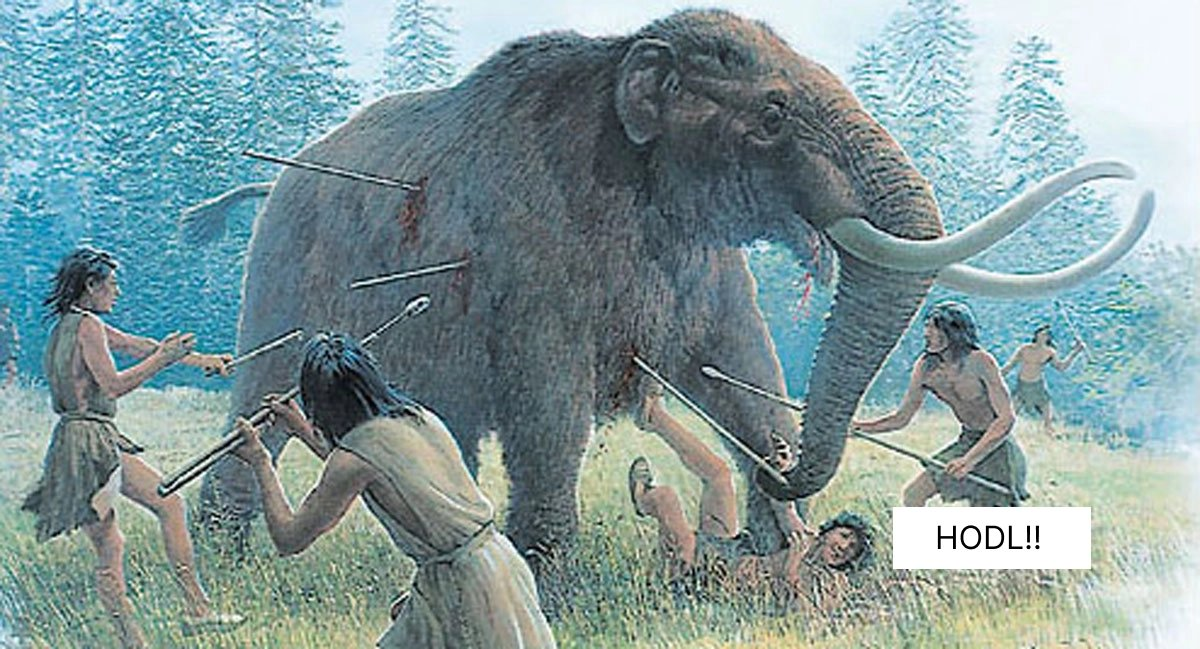
In contrast, most relationships in modern life have such little meaningful stakes. Making small talk while you pretend to enjoy an escape room or axe throwing with coworkers you barely know feels like pantomime. Survival shows like The Walking Dead & anime genres like isekai have exploded in popularity b/c people crave "found family" and real connections forced by externalized, high-stakes situations. There's nothing like making and losing money w/ friends to really get core groups going. Environments that engender these moments is where ONLINE SOCIAL has some of its most exciting, unexplored design space.
why not gamble on a casino
Pure gambling imo has topped. Vegas is a ghost town these days. Online casinos are increasingly commoditized - same games, same UI, same rewards. The only edge is distribution (Drake sponsorships, logo placements). Low Retention + High UA costs means extremely low valuation multiples and growth potential.
There will always be slots players. However, the audience of people willing to leave everything up to lady luck will always be capped - people want to feel like they have some level of control or agency over high stakes actions. Meme traders know that the EV of flipping memes for the avg trader is significantly worse than any casino game. Yet they still balk at pure gamba, preferring to at least have a bit of copium around their perceived edge.
the current lull
The rest of the current financialized entertainment category is not much better off atm, outside of prediction markets. There’s an incredible amount of retail exhaustion / burnout from trading. Perps, especially on alts, are the easiest way to get violated on chain by market makers and insiders who are structurally set up to never lose. Crypto trading is also cyclical and tied to macro, which makes for a poor business. Many words have already been written about the state of the trenches. There are real consequences to relentlessly exploiting all of the "fish" from your game. Eventually, they stop coming back.
Until these products can solve their extraction problems, they will be structurally capped.
the next big category: degen games

What's interesting when looking at what's worked so far, is that each vertical has broken out by latching on to a new audience and using that as the key driver for growth. Perps is gambling for whales, memes is gambling for influencers and tiktok zoomers, prediction markets is gambling for sports/politics nerds, etc. What nobody has cracked yet are the hardcore gamers.There's been many attempts. All have failed to pass either the base quality bar (hardcore gamers have an extremely refined "bullshit" meter), or have lacked a strong financialized entertainment formula and risk loop. Financialized games are extremely hard to do correctly. But the potential market is just too big to ignore. In the US, there's 5.6x as many gamers as active crypto, prediction market, or casino users. Most would never deposit into a casino to spin slots or trade crypto. But they'd be much easier to convince to play high-stakes degen games.
what is degen gaming
Degen games are skill-based games with elements of chance, where risking digital assets inside of the game is the gameplay mechanic, not a layer built on top. If multiplayer, they feature deep, hyper-financialized economies. Others look more like gamified gambling.Think Tarkov / Arc Raiders with stakes. Or Crypto Runescape.The core fantasy and hook is
Make money by being good at video games
It's a very simple value prop, and it closely mirrors similar pitches for memecoins, perps, and prediction markets that have proven success with retail (e.g. "make money by being right about the world").
the audience
Gamers are probably the only remaining terminally online audience that is primed for exactly these types of products. The degen brain and hardcore gamer brain are basically the same. Trading, min-maxxing, calculating EV per dungeon run, grinding hundreds of hours chasing rares. Gamers also usually have an overinflated sense of their abilities, making the "perceived skill" problem easier to solve.

Gamers are also already basically gambling. Just in the past few years, Balatro, Roblox, Vampire Survivors, Tarkov, Dark & Darker have all primed hundreds of millions of players to be comfortable with high-variance, stakes-based mechanics. The dopamine hit from extracting in Tarkov when you have quest items and are juiced to the brim with loot, drugging yourself just to limp to an exit while gunshots echo behind you is the exact type of loop that fits degen games - continuous risk vs reward.People are looking for the next big twist.
what makes a good degen game
At the risk of leaking too much alpha:
- Risk-to-Earn - must deposit to play, outside of targeted promotions
- No Skillshots - stat or dice roll checks, not twitch gaming. bad players can beat good players, high skill has EV edge over time
- Incomplete Information - some perpetual mystery, often from pvp or from a changing metagame. should not be easily "solvable" / "bottable"
- Continuous Risk/Reward Decisions - this is the game
- Game Feel / Juice - you need to put people in the "zone"
- Adversarially Robust - anti sybil / agent / bot / exploit systems
Poker, + to a limited extent Blackjack, are prototypical degen games.
Degen games are interesting b/c they need to be designed from the ground up to be financialized entertainment. Adding real stakes to games is non-trivial, you can't just slap a wager on and call it a day. It's an incredibly exciting and relatively unexplored design space.
key advantages
⭐️The biggest structural advantage of a well-designed degen game is that the extraction problem is solvable in ways it simply isn't for perps/memes.
A game has parameters you can fully control. You can tune the skill curve. You can adjust the rake, the variance, the pace of the meta. You can design mechanics that give skilled players an edge without making it so deterministic that new players stop believing they have a chance. Pump fun managed to strike the perfect balance when they first launched, kicking off one of the biggest PvE environments to date. However, the sharks inevitably took over, leading to the state of the trenches you see today. Perp exchanges have it even worse - the underlying market is outside their control.
This essentially makes them inferior games.

The second moat is content. Emergent PvP is perpetual content generation that no studio has to pay for. Guild conflicts, economic wars, legendary players, improbable comebacks - these stories write themselves and they market the game for free. The reason people watched poker on ESPN wasn't the cards, it was the characters & drama. A hyperfinancalized game with real stakes generates that drama continuously and organically in a way that no static casino product ever could -> proliferation on YT, etc.
The third moat is identity and retention. Stakes create investment - not just financial but psychological. Players who've built reputations, accumulated achievements / soulbound cosmetics / small advantages, and formed communities inside a game don't churn. The switching cost isn't just money they'd lose, it's their identity inside of the game. MMO games understand this, and additionally have NETWORK effects, because each new player is another interesting person to play against or meet in game, something that completely changes the growth story and retention metrics.
Finally, games own and can compound their IP. Most financialized entertainment products have weak moats because they're wrappers, simply adding stakes on top of some real-time core *thing* that people care about - e.g. prediction markets with politics/sports, memes with memes, perps with crypto price action. With degen games, the high $ volume derives from the design of the game itself, which is hard to easily clone.
why now?
Traditional gaming is getting eaten. Since 2021, American spending on video games has DECREASED by total dollar figures. Over that same period, sports betting / casinos grew from $11.3B to $32.8B, and crypto / memes / prediction mkts / grew even more. When it comes to winning the war on attention, games and other forms of entertainment are starting to rapidly lose to activities w/ higher stakes. It's a fundamental consumer spend shift.
I don’t even play the best games anymore, much less my steam backlog, even though i grew up spending most of my early life playing games.
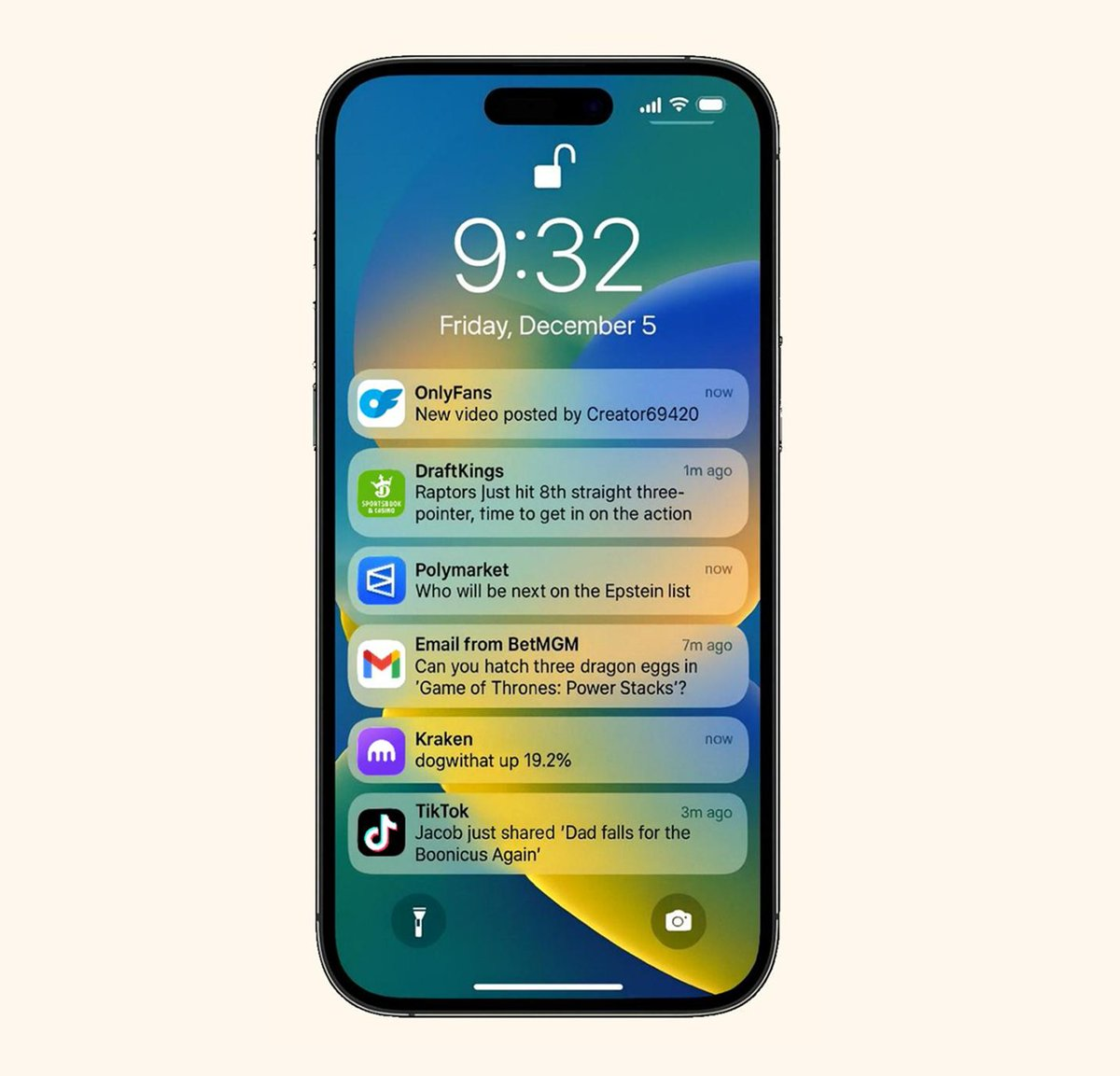
Try playing poker with play chips after you've played for real money, or watching a game without a bet on it after you've had skin in the game. Players who got sucked into the Duel Arena or RMT'ed gold in Runescape seldom went back to the main game afterwards. The dopamine profile changes permanently. You cannot go back down the significance ladder once you've climbed it. Every person who gets a real taste of stakes-based entertainment becomes a customer for life and starts looking for the next, higher rung.

When you're in a war for attention, this is like having a f*cking bazooka.
state of degen games
This is not an entirely new vertical. However, the state of real-money gaming is embarrassingly bad, existing players take casual games (Solitaire, bubble shooters, bowling), slap a real-money entry fee on them, and call it skill-based gaming. The games are shallow, the skill expression is minimal, the social layer is nonexistent, and the experience feels like a mobile ad from 2014.

These companies have processed billions in entry fees and yet the product hasn't meaningfully evolved in a decade. Real money games need depth. The type of people who would prefer miniclip tier games don't have the disposable income to drive multi-B $ game volumes.

Poker is the last time someone created a genuinely new skill-based real-money game format that achieved massive scale. Online poker's boom was roughly 2003-2011. That was the last major innovation. Everything since has been either pure chance (slots, roulette with crypto deposits) or the Skillz model (trivial casual games with money layered on).---
why cambria
As a builder, I've spent the past 2.5 years slowly building the degen game I've always wanted to play, to fill what I think is a massive gap in the market. Let me take you briefly through what we've built.
Rank 1 @PlayCambria. pic.twitter.com/JnfTleSyxN
— Maple (@0xGacha) April 16, 2025
Cambria (@playcambria) is a risk-native MMO that combines a degen "expedition" loop (high $ volume, more RNG, Tarkov/Arc Raiders esque extraction) with a competitive MMO loop (skilling/full loot pvp/raids/GvG) that creates a deep economic layer on top.
Players additionally hunt for and trade Relics - limited legendary items that are required to compete at the highest levels of the competitive loop.
We've been building each core component step by step, originally with playtests, and more recently shifting into ~2 week long Seasons. With the most recent 2 releases, we've started to see a rapid uptick in key metrics.
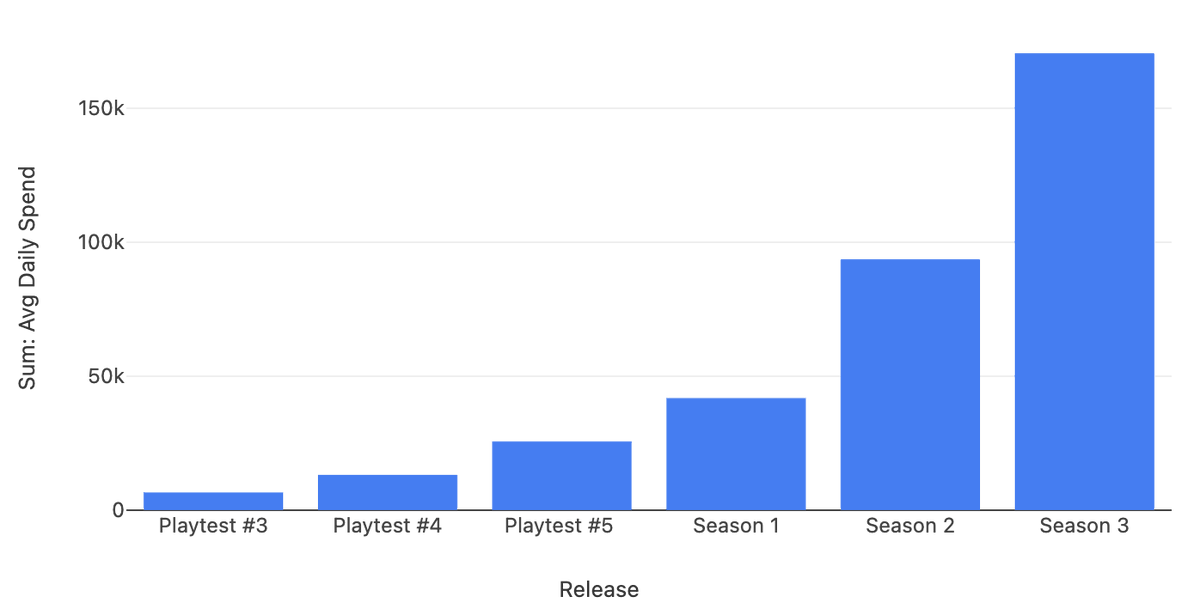
Season 2 and 3 (stats) of Cambria have been some of the biggest events in crypto gaming, with 3-4k concurrent (paid) players online during peak times, and million dollar prize pools directly from player risk.
⚡ INSIGHT: If the Hunger Games and crypto had a baby, it might look like the "addictive" Season 2 of Cambria where users risk their assets to win.
— Cointelegraph (@Cointelegraph) April 15, 2025
Web3 Gamer via Cointelegraph Magazine pic.twitter.com/vwLxQufaN2
To fully double down on the potential, we've been cooking up something big.
Our upcoming Genesis release is where we take Cambria to the masses, with a 24/7 online launch of the game, pulling together the Duel Arena, Gold Rush seasons, and Islands gameplay into a single persistent world.
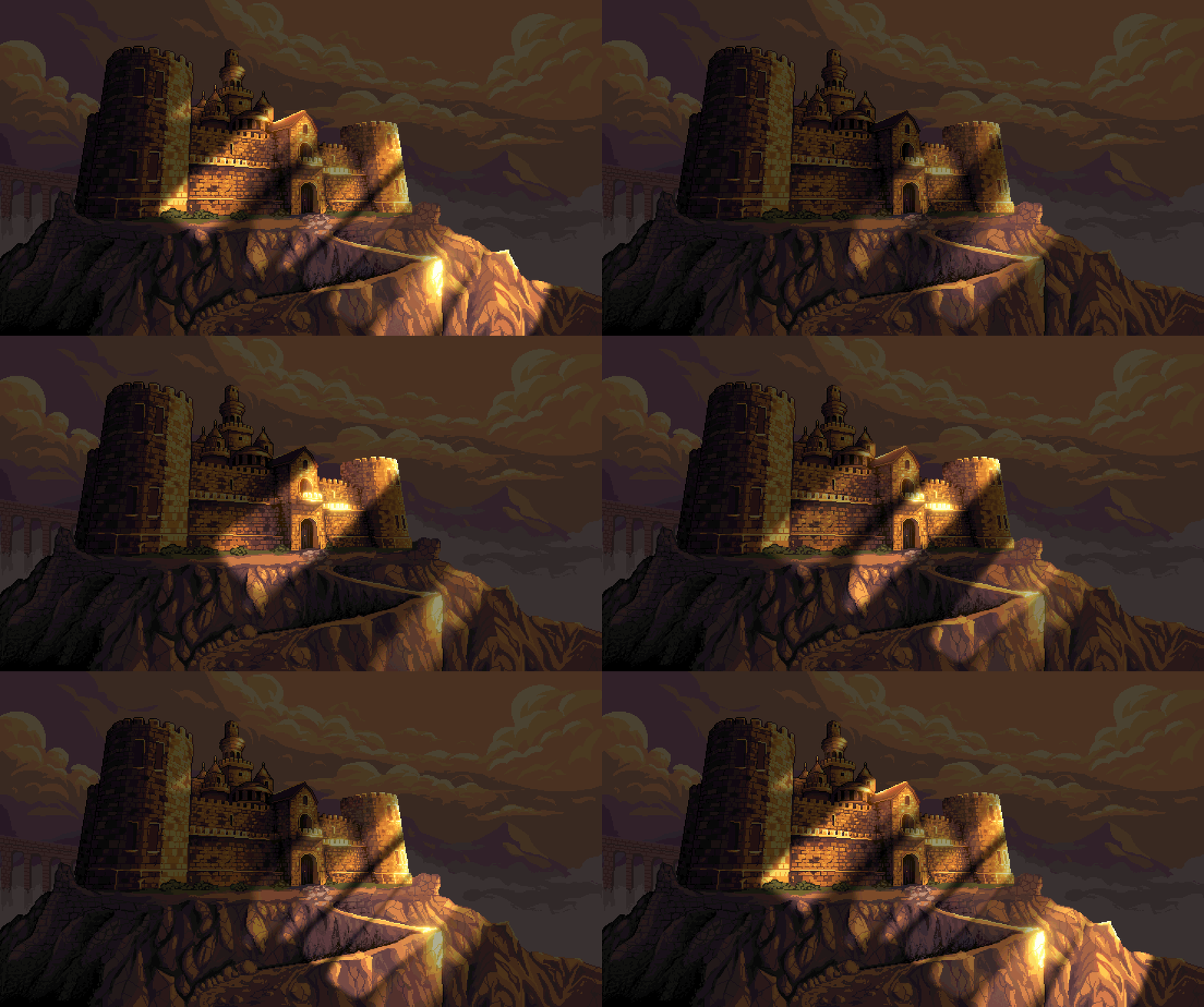
Here's why I think we will win the market with Genesis, once released.
cambria is addictive
From the very beginning, we've designed moment-to-moment gameplay purely around puttting players in the zone. Game feel, juice, and moment-by-moment game mechanics all combine to achieve this.
This is peak degen Cambria gameplay.@playcambria pic.twitter.com/2xG4VegdWV
— Butko (@xButko98) December 12, 2025
Every second of the game loop is a continuous risk/reward decision.
friends who mine together, stay together pic.twitter.com/GmM3LuXqcE
— Meg (@justmeg) December 13, 2025
If you make it back and bring home the bacon, we close the loop.
This is what hitting the artifact submission limit looks like in @playcambria pic.twitter.com/lOntc9eFte
— inhuman (@inhuman) December 9, 2025
While simple to get started, pushing your edge to the max requires skill.
Are you struggling with kiting monsters and burning too much money to resources in @playcambria?
— Maple (@0xGacha) December 16, 2025
Don't worry, this guide will teach you how to maximize your gains by kiting properly! pic.twitter.com/wJSTq2H4TI
This ensures that you can't just afk / bot the game, and pulls your full focus.
One sign of a good game is while @playcambria isnt hitting as much clip scores, these streamers are legitimately playing for hours and half the time they arent saying anything because theyre too into the game
— Jonah (@JonahBlake) December 9, 2025
thats a good sign for a game dev! pic.twitter.com/hAafphviJm
Every chance encounter in Cambria with other players is a potential for drama.
How to hit a lick in @playcambria feat. Auto Pickup🤣🤣🤣 pic.twitter.com/m1L6fw27iB
— meta (@metaph0xr) April 18, 2025
Leading to pure degen retardation.
he has a point
— Laxo (@0xLaxo) April 22, 2025
cc @Brckdrtr pic.twitter.com/1NqCzKRdvd
our next growth inflection
We think Cambria is one of the few crypto games with crossover appeal to degen OSRS guilds, web2 runescape streamers, and hardcore gamers, creating a base that's not strictly tied to "web3 gaming" players.
Quoting @huntersolaire_, "im seeing probably the most interesting mix of degens, memecoin gamblers, esoteric gcr clones and regular old gamers in web3 playing and posting about the game."
POV - you just got PK’d by me in @playcambria pic.twitter.com/cArd14Y0U2
— wenpussy (@wenpussy) April 19, 2025
The core of our GTM strategy for Genesis will be replicating the "Chris Moneymaker" effect that led to the rise of online poker - a set of viral moments where we create a new class of winners (top Cambria players) and tell their stories. Degen gaming creates a new class of heroes: the player who mastered the economy and made six figures. The guild leader who orchestrated a territory takeover worth real money. The solo player who pulled off a legendary extraction against impossible odds. The crafter who cornered a market and became the richest person in the world.
I met the #1 @playcambria player in S2! pic.twitter.com/xR35lbaRS0
— Elisa (optimism/acc) (@eeelistar) November 20, 2025
$RSGP
With Cambria, we're building a cult. Through our games, we ultimately are trying to proliferate $RSGP to as many people as possible. We believe that the best power users of our games will also buy in heavily into the token. We're working on net new mechanisms to make this possible.
What's more, we think creating a community around a protocol / token network taking volume-based fees on crypto risked aligns the game's incentives with players in ways that potentially could solve the fundamental misalignment that games monetization has struggled with for decades.
The upcoming launch of $RSGP is our big swing at this.
the end game
the end game of crypto gaming is flash loaning millions in ETH to charter thousands of mercs to warp in on your archrival castle, rugging their treasury, all while running from 10e of kill contracts created by speculators losing in the prediction markets because of ur antics pic.twitter.com/uEPT1hpeE8
— BEN.ZZZ (@cyberpunk) November 3, 2024
We're not getting full dive VR anytime soon.
"MMOs but life or death" is likely a step too far.
However, in the very near future, hyperfinancialized games with multi-B economies will create spectacles that will not be far behind those of Aincrad. The fantasy isn't just "I can win money," the fantasy is a world where anyone can be the main character of the Great Game. This is the future that degen gaming on decentralized, neutral rails was always meant to create.

It's time to build infinite new worlds to conquer.